


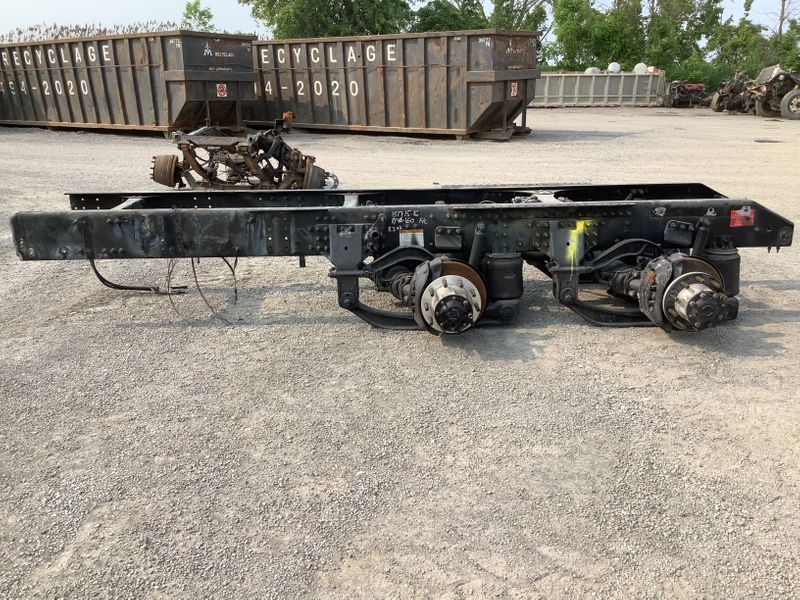
The heavy-duty truck differential is an unsung hero. It is an essential mechanical component that is easy to forget about—until it starts making a concerning noise.
Located just after the transmission, it provides the final connection to the drive wheels. It has two critical functions: allowing the wheels to rotate at different speeds when cornering, and reducing the driveshaft’s rotational speed to a level manageable by the axle.
At Gamex, we understand just how crucial it is. That’s why we supply inspected complete used differentials and parts for major brands such as Eaton and Meritor. Understanding how it works and knowing when it needs maintenance is the best way to avoid a breakdown that can sideline your truck and drain your wallet.
The Two Vital Functions of a Differential
This mechanism is an engineering marvel, designed to handle enormous torsional forces.
- Mission 1: Managing TurnsWhen a truck turns, the outside wheel travels a greater distance than the inside wheel. Without a differential, both wheels would be forced to rotate at the same speed, causing unpleasant tire scrubbing, unstable handling, and premature tire wear. The differential allows the wheel speeds to vary independently, ensuring the truck maintains proper traction.
- Mission 2: Gear RatioThe differential is the final stage of power reduction. It is defined by its gear ratio (for example, 3.55:1 or 4.10:1), which must be perfectly matched to your engine, transmission, and the truck’s intended application:
- Low Ratio (e.g., 3.08): Ideal for highway driving and long-haul operations. It allows higher speeds at lower engine RPMs, improving fuel economy.
- High Ratio (e.g., 4.30): Ideal for heavy hauling or off-road applications. It provides greater torque and improved pulling power for heavy loads.
Warning Signs of an Imminent Failure
A differential usually does not fail without warning. Paying attention to these signs can save you a significant amount of time and money:
- Excessive Noise (Whining or Howling): This is the most common symptom. A sound that becomes louder or higher-pitched with speed often indicates worn oil, bearings, or gears.
- Vibrations: If you feel vibrations through the floor or seat, especially at certain speeds, it may indicate an unbalanced driveshaft or an internal axle issue.
- Oil Leaks: Any visible leak around the housing or seals is urgent. Low oil levels lead to inadequate lubrication and very rapid overheating.
Preventive Maintenance: The Key to Longevity
The lifespan of your differential depends almost entirely on the quality and consistency of its maintenance.
A. Oil Change (The Essential Maintenance Task)
The oil inside the differential operates under extreme heat and pressure conditions.
- Frequency: Follow your manufacturer’s recommendations (Meritor, Eaton), but generally, an oil change once a year or every 150,000 to 250,000 km is a good guideline.
- Quality: Only heavy-duty hypoid gear oil should be used, typically rated GL-5, as it is designed to withstand the extreme pressures between gear teeth.
B. Regular Visual Inspection
During every engine oil or tire change, have the shop carefully inspect the housing: no dents, no leaks, and seals in good condition.
Replacement: Choosing the Right Unit
If the damage is too severe, it is often faster and more cost-effective to replace the entire unit with a quality remanufactured or used differential. At Gamex, we carry a large inventory of the industry’s most trusted brands.
When replacing a differential, it is crucial to install one with an identical or compatible gear ratio. This is the only way to ensure the perfect balance between the engine and wheels, maximizing fuel efficiency and the longevity of the entire drivetrain.
The Most Popular Heavy-Duty Truck Differential Manufacturers and Types
| Manufacturer | Popular Series | Key Features | Target Application |
| Eaton | DS/RS 404 | Highly versatile. Offers locking differential systems (lockers) for maximum traction. | General highway use, regional hauling, harsh conditions (snow/mud). |
| Meritor | RT-40/46-160 | An industry staple known for durability and widespread parts availability. | Long-haul transportation, light construction trucks. |
| Dana Spicer | S-110/S-130 | Often selected for lighter-duty applications or steering axles. | Heavy delivery trucks, specialized utility vehicles. |
| Mack | C/C500 Series | Integrated with Mack drivetrains. Durable and ideal for heavy-duty applications. | Dump trucks, concrete mixers, construction equipment, quarries. |
| Volvo | VNL Series | Often proprietary axles designed for fuel efficiency alongside D13 engines and I-Shift transmissions. | Fleets focused on fuel economy and long-haul operations. |
The Different Types of Differentials:
- Open Differential (Standard): The most common type. It sends power to the wheel with the least resistance (ideal in turns, less effective on ice).
- Limited-Slip Differential (LSD): Helps by transferring some torque to the wheel that still has traction when the other wheel slips (a good compromise for improved traction).
- Locking Differential: Used in extreme situations. It “locks” both axle shafts together so they rotate at the same speed, delivering 100% of the torque to each wheel. Essential for off-road conditions.
Conclusion: Never Neglect Your Rear Axle
The differential is your durability insurance. Neglecting it can result in costly replacement expenses and, even worse, truck downtime.
When you choose Gamex, you get more than just a vast inventory of inspected units. You gain access to the expertise needed to ensure the differential ratio perfectly matches your fleet’s specifications, guaranteeing performance and reliability.
Have you noticed an unusual noise from your rear axle or are you experiencing vibrations?
Contact Gamex today or browse our inventory to check availability for a replacement differential from Eaton or Meritor, replacement parts, and arrange fast shipping.


