


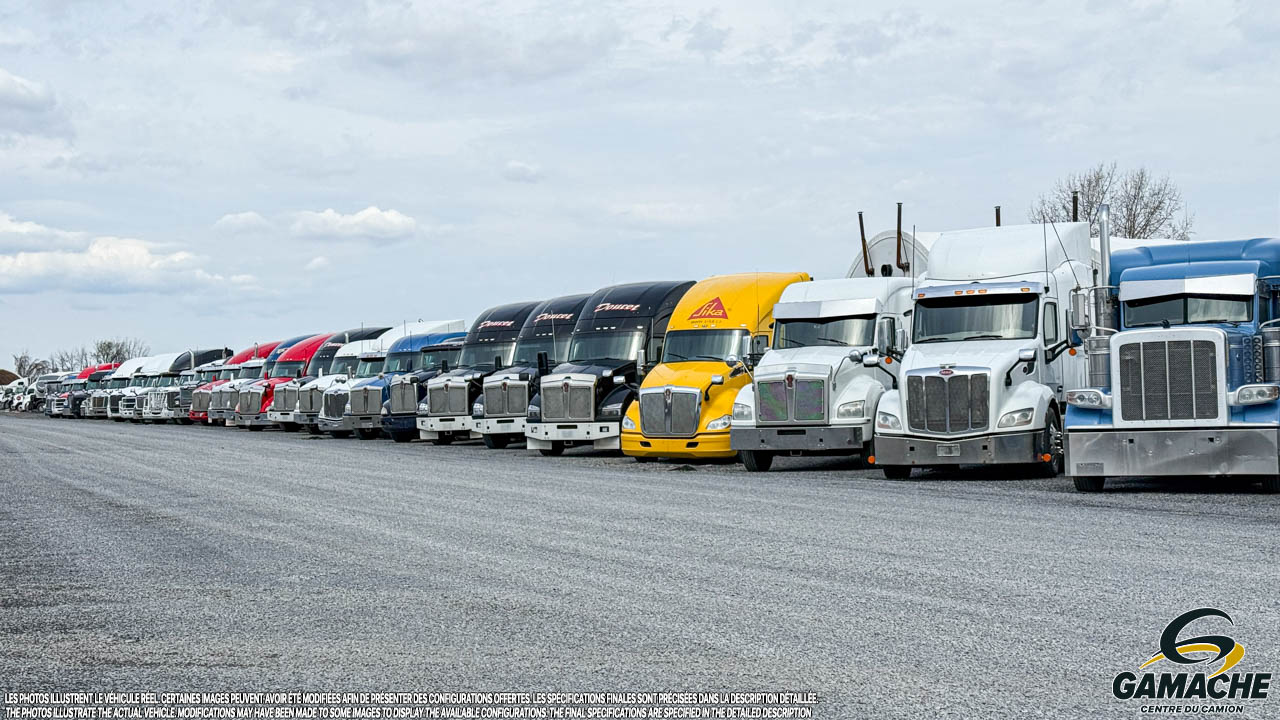
After several years marked by declining freight rates, rising operating costs, and a slight correction in equipment prices, the used heavy truck market is now showing signs of stabilization. Buyers remain cautious, but several indicators suggest that demand could gradually pick up over the course of 2026.
According to analysis published by Transport Topics, Ryder is seeing improving conditions in the used commercial vehicle market. Other specialized organizations, such as ACT Research, are also observing tightening freight capacity and a gradual improvement in certain market indicators.
For an owner-operator or a company looking to replace a truck or expand its fleet, an important question arises: is now the right time to buy a used heavy truck?
A market stabilizing after several difficult years
The heavy truck market generally follows the cycles of the trucking industry. When freight volumes are high and freight rates are favorable, companies invest more in renewing and expanding their fleets.
Conversely, when rates decline, carriers delay their purchases and keep their vehicles longer. This is what happened after the peaks seen during the pandemic.
This slowdown period led to:
- a decrease in demand for certain heavy trucks;
- a drop in the price of several used tractors;
- an increase in available inventory;
- greater caution among buyers;
- sometimes more difficult financing conditions.
In 2026, however, the situation is starting to change. Prices aren’t necessarily rising quickly, but they do appear to be becoming more stable across several vehicle categories.
An improving used truck market
In its article on Ryder’s outlook for the used truck market, Transport Topics explains that the company is observing more favorable conditions than in previous periods.
Ryder is a particularly interesting source for analyzing the market. The company manages a large fleet of commercial vehicles across North America and regularly resells trucks from its leasing and fleet management operations.
Its results therefore offer a glimpse into demand coming from:
- owner-operators;
- small trucking companies;
- regional fleets;
- companies needing to quickly replace a vehicle.
Buyers remain attentive to price, mileage, mechanical condition, and financing costs. However, newer trucks that are well maintained and feature popular configurations appear to be attracting more interest.
Tightening capacity could support demand
The price of a heavy truck depends directly on its ability to generate revenue. When freight rates are low, companies have less margin to make payments, cover fuel costs, maintain their vehicles, and pay their drivers.
When rates rise and available capacity decreases, carriers can start investing again.
In its analysis of the 2026 trucking market, Ryder notes that several signs point to a gradual tightening of capacity. The company points out in particular that spot rates have surpassed contract rates and that load rejections have reached their highest levels since 2022.
For its part, ACT Research estimates that the trucking market is entering a period where available capacity is becoming more limited. This situation could support:
- freight rates;
- carrier profitability;
- fleet renewal;
- the value of used heavy trucks.
Used truck prices may have reached a better balance
After the exceptional price surge during the pandemic, the used truck market went through a significant correction. Many vehicles are now offered at more reasonable prices than at the market’s peak.
Price stabilization doesn’t mean that every truck will automatically increase in value. The price of a unit still depends on several factors:
- the truck’s model year;
- mileage;
- engine hours;
- make and model;
- engine and transmission;
- axle configuration;
- maintenance history;
- mechanical and cosmetic condition;
- demand for that type of truck.
Clean, well-maintained trucks suited to the most sought-after applications could be the first to benefit from a more pronounced rebound in demand.
Why buy a used heavy truck now?
It’s impossible to predict the perfect time to buy. However, the current environment offers several advantages for companies that already need a vehicle.
Take advantage of more accessible prices
The price of many used trucks remains below the levels seen during the pandemic. Companies can therefore find a better balance between age, mileage, specifications, and purchase cost.
Access a wide selection of vehicles
A large inventory makes it possible to compare several types of used heavy trucks:
- sleeper tractors for long-haul transport;
- day cab city trucks;
- 10- or 12-wheel dump trucks;
- dry van trucks;
- refrigerated trucks;
- specialized trucks.
Get the truck to work quickly
Unlike a new truck, which sometimes needs to be ordered several months in advance, a used truck already in inventory can generally be inspected, financed, prepared, and delivered quickly.
For a company that has just landed a new contract or needs to replace a sidelined unit, this availability can significantly reduce lost revenue.
Avoid first-year depreciation
A new truck generally loses a significant portion of its value in its first few years. By buying a used vehicle, the largest share of that depreciation has often already been absorbed.
Which trucks could be most in demand?
The recovery won’t necessarily affect all vehicles equally. Buyers generally look for trucks that can be put to work quickly and whose operating costs are predictable.
The most sought-after features may include:
- reasonable mileage;
- available maintenance history;
- a popular axle configuration;
- a well-known, easy-to-maintain engine;
- a transmission suited to the intended use;
- a cab and frame in good condition;
- a warranty that is still valid or available.
Popular models from brands such as Kenworth, Peterbilt, Freightliner, Volvo, Mack, International, and Western Star generally continue to enjoy solid demand across the North American market.
How to choose a used heavy truck wisely
The listed price should never be the only deciding factor. A cheaper truck can end up costing much more if it soon requires major repairs or doesn’t truly suit the job at hand.
Before buying, it’s recommended to check:
- the vehicle’s history;
- inspection reports;
- repairs already carried out;
- engine and transmission maintenance;
- the condition of the emissions system;
- tire and brake wear;
- leaks or signs of corrosion;
- axle capacity and differential ratio.
You can also consult our used heavy truck buying guide to better understand what to compare before making a decision.
Don’t forget total cost of ownership
The true cost of a truck isn’t limited to its purchase price. Before choosing a unit, you should also consider:
- monthly payments;
- the interest rate;
- fuel consumption;
- insurance;
- maintenance costs;
- tire costs;
- potential repairs;
- downtime;
- future resale value.
A tailored financing solution can also help preserve a company’s cash flow and better spread out the cost of the equipment.
New truck or used truck: which option to choose?
A new truck offers a full warranty, the latest technology, and the ability to order a precise configuration. However, it requires a larger investment and can involve long delivery times.
A used truck generally offers:
- a lower purchase cost;
- faster availability;
- initial depreciation already absorbed;
- potentially more affordable payments;
- a wider choice of makes and configurations.
For an owner-operator, a growing business, or a fleet that needs to quickly replace a unit, a used truck can be a particularly cost-effective option.
What’s the outlook for the rest of 2026?
The outlook is more encouraging than it has been in recent years. However, the market remains influenced by several economic factors.
Among the factors that could support demand are:
- the gradual improvement of freight rates;
- the decrease in available capacity;
- the aging of fleets;
- the need to replace high-mileage vehicles;
- better utilization of trucks already on the road.
Some factors, however, could slow the recovery:
- fuel prices;
- interest rates;
- tariffs;
- maintenance and labor costs;
- economic uncertainty.
The most likely scenario is therefore a gradual improvement rather than a sudden rise in all prices. The cleanest, best-maintained, and best-configured trucks should remain the most sought-after.
Why choose Centre du Camion Gamache?
For more than 55 years, Centre du Camion Gamache has been helping owner-operators and trucking companies choose their used heavy trucks and trailers.
Our team can help you:
- find a truck suited to your operations;
- compare several makes and configurations;
- understand the vehicle’s history;
- get a personalized financing solution;
- get back on the road quickly.
Thanks to our extensive inventory, you can compare several truck categories and find a unit that truly matches your company’s needs.
Used heavy trucks: a smart choice
The used heavy truck market appears to be entering a new phase. After a price correction following the pandemic and related political and economic factors, several indicators now point to a stabilizing market and a gradual tightening of freight capacity.
For companies that already need to replace a vehicle or expand their fleet, the current environment can represent an attractive opportunity. Buyers can still take advantage of:
- prices more accessible than during previous peaks;
- a wide selection of vehicles;
- fast availability;
- initial depreciation already absorbed;
- tailored financing solutions.
What matters most is choosing a well-maintained truck, rigorously inspected, and suited to the job at hand. At Centre du Camion Gamache, our team is here to guide you through every step of your next purchase.


